Hi there all,
We were feeling like shooting some photos today, so we got
some great images of our careful attention to fiber
alignment. I've been meaning to shoot this for years, but
only recently did my brother-in-law give me the gadget that
does macro so well. While we repair these sensitive
paragliding wings we all love, we see a lot of fine details.
I have long felt that looking closely at ripped edges is a
fascinating education on the forensics of fabric failure. We
can almost always tell how and where the failure started.
Sometimes you can even see oxidation on the ends of fibers
which tells you they were damaged before the current
failure, like rust on a dent in a car panel.
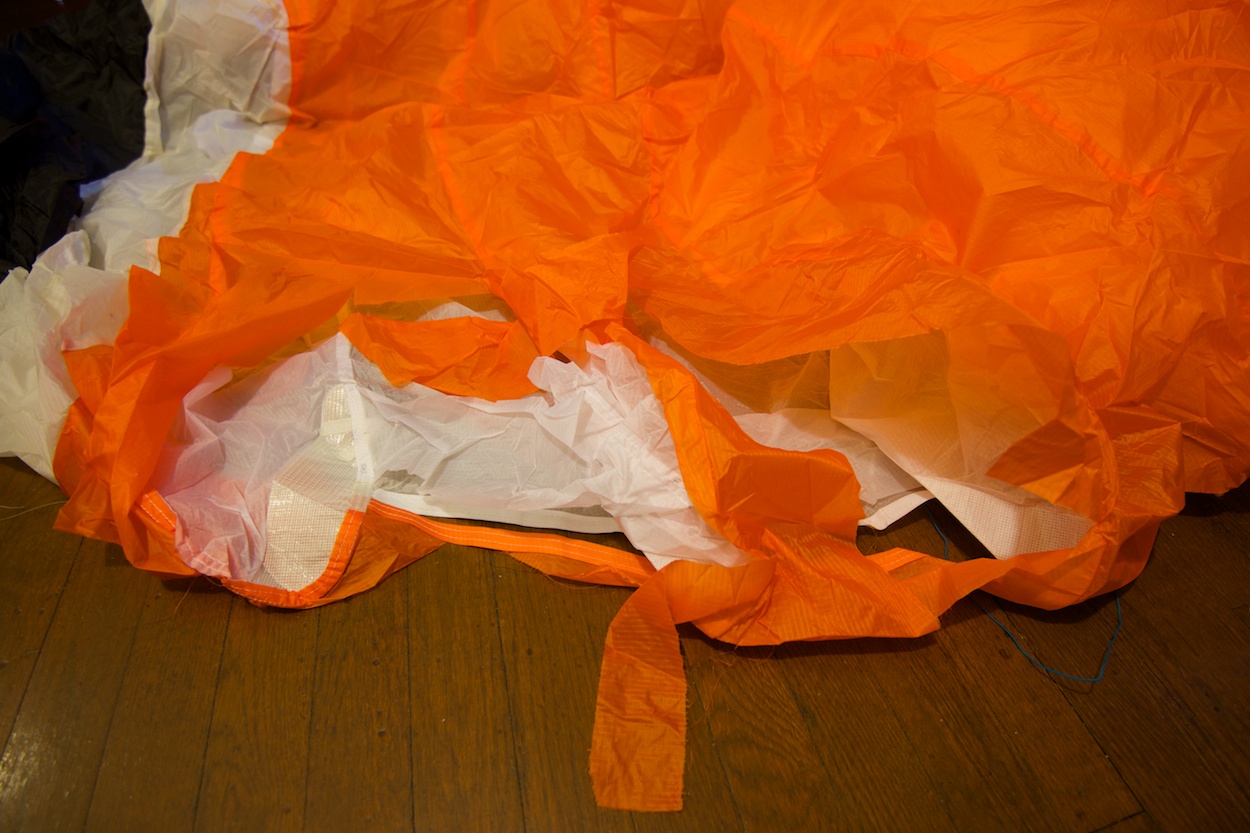
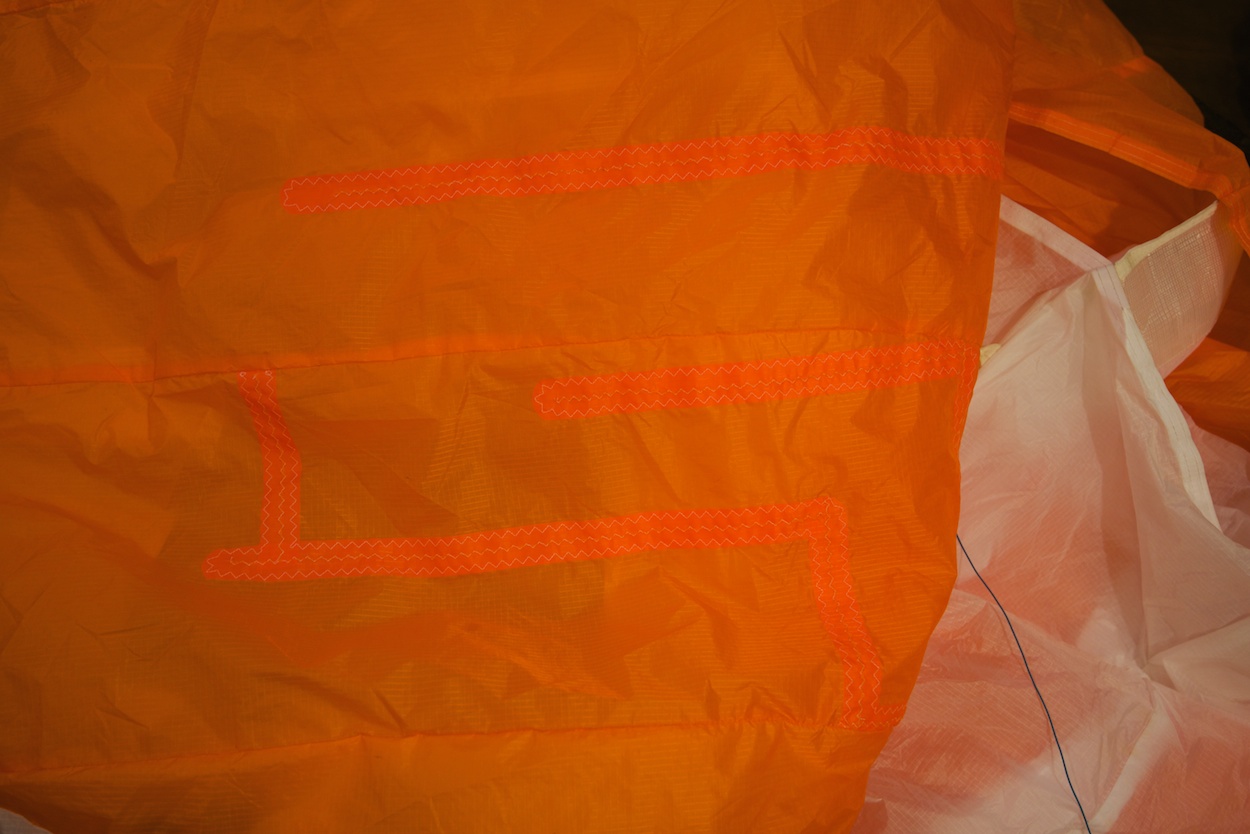
Here we see a Dudek Nemo paraglider that was hit by the
propeller. We see and repair this a lot, and we take great
care that the shape is undisturbed, and the restoration is
total.
Above we see the rather brutal prop strike that ripped the
fabric across two cells.
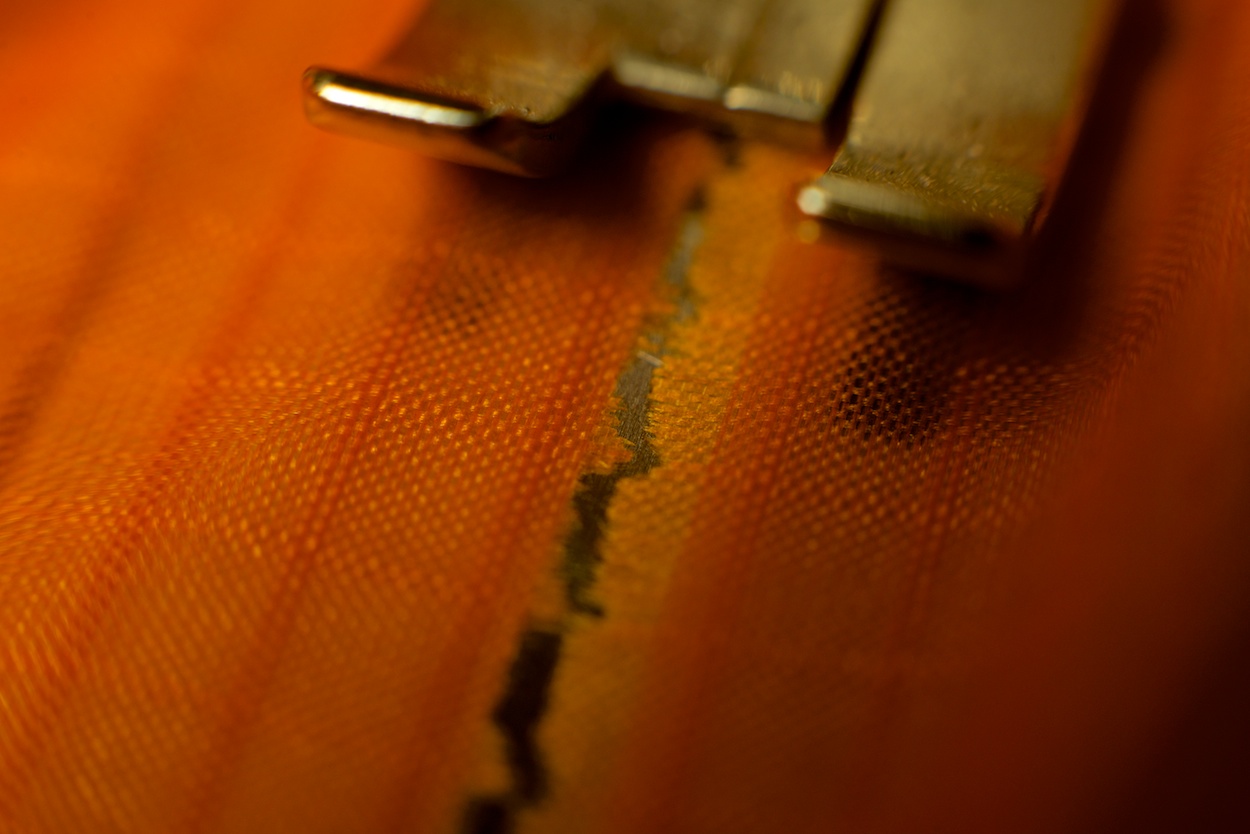
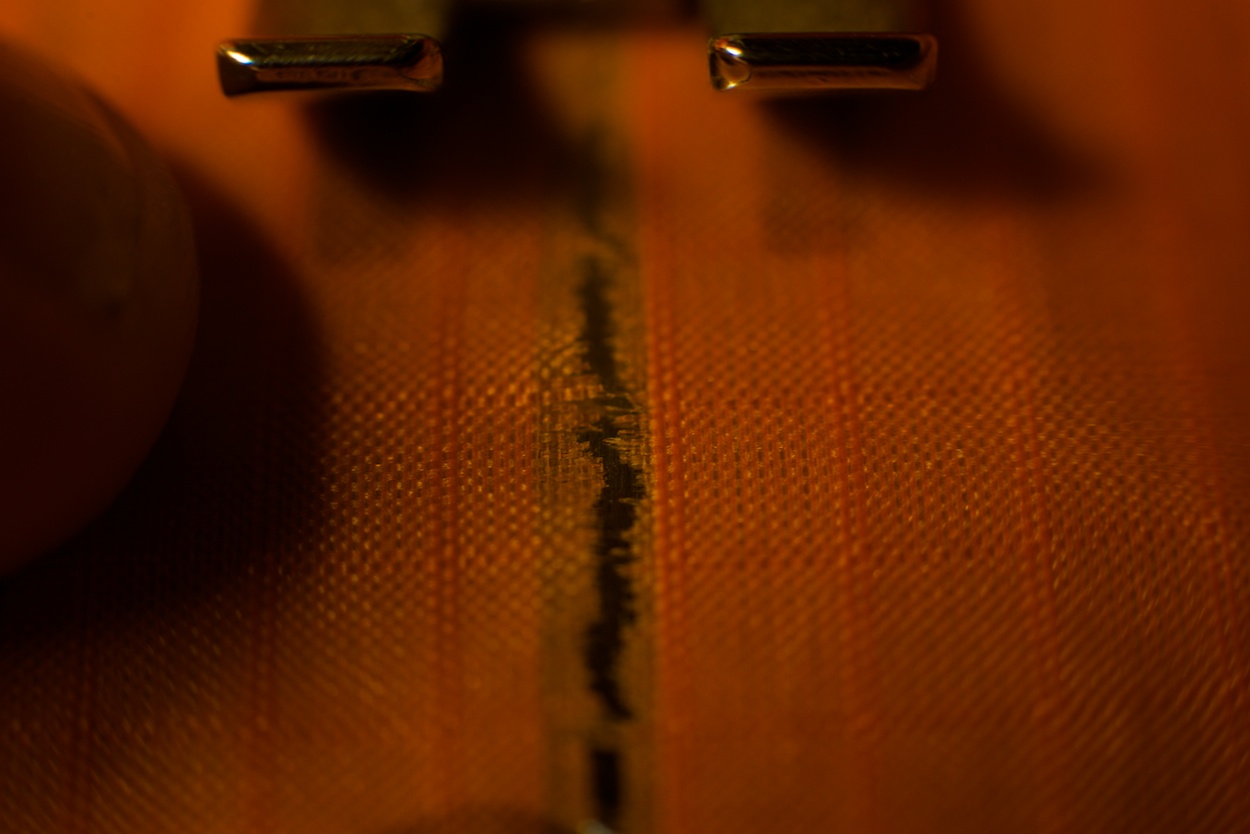
This is the part that even after all the years of sewing, we
still find pleasing to do. We talk elsewhere on our site
about fiber-for-fiber alignment for our fabric wing repairs,
and this is what we mean here. Every part of a rip in fabric
has a unique key that you can plainly see. If you look
carefully enough, and you have the patients to pay
attention, the edges can be aligned within less than 1 mm .
For us, that is still a bit of fun, and it makes for results
as near to perfect as we can figure.
The grid pattern of the "ripstop cloth" in these shots is
4mm square. The individual fibers fit into the ridge of a
fingerprint. This rip was a particularly good example of the
"keying" that happens when fabric of this type fails.
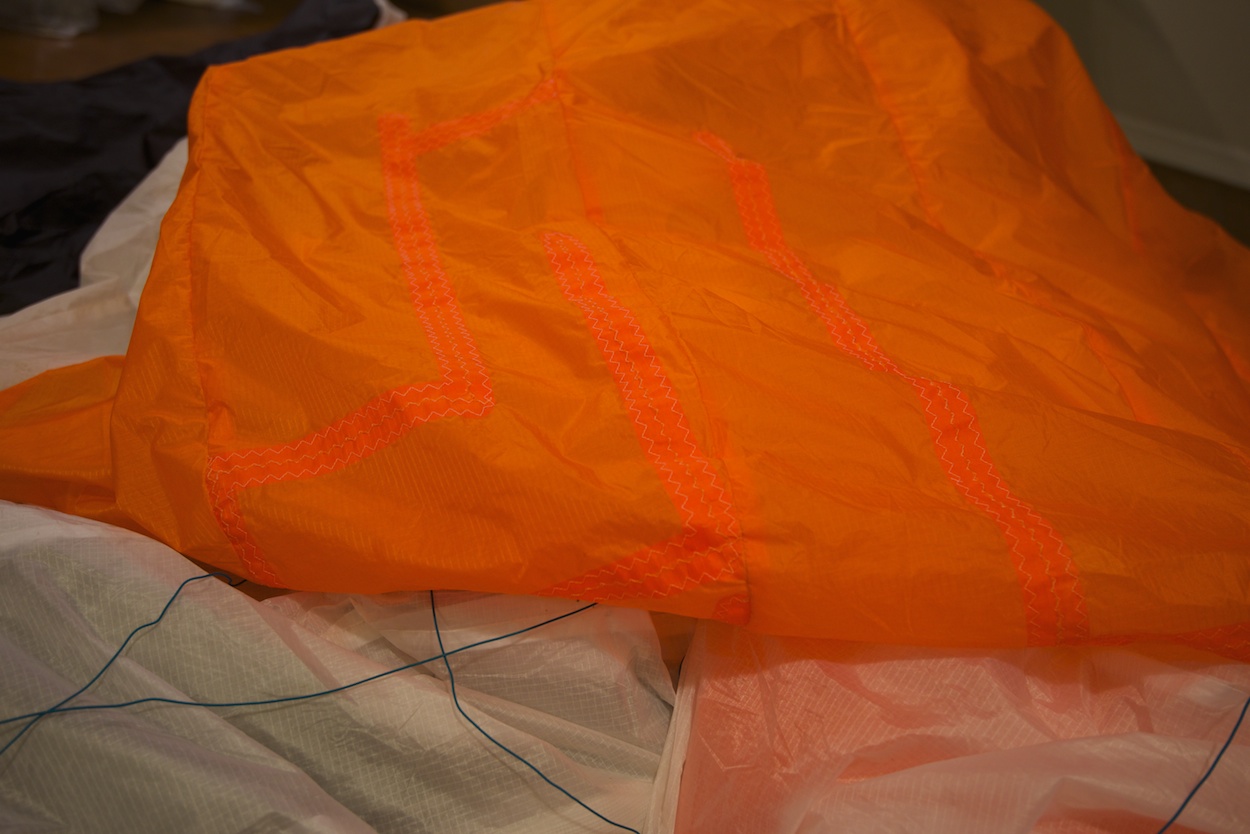
These after shots are here on our studio floor at WindFire
Designs. We will try to get some shots of this wing when
it's back in the sky.
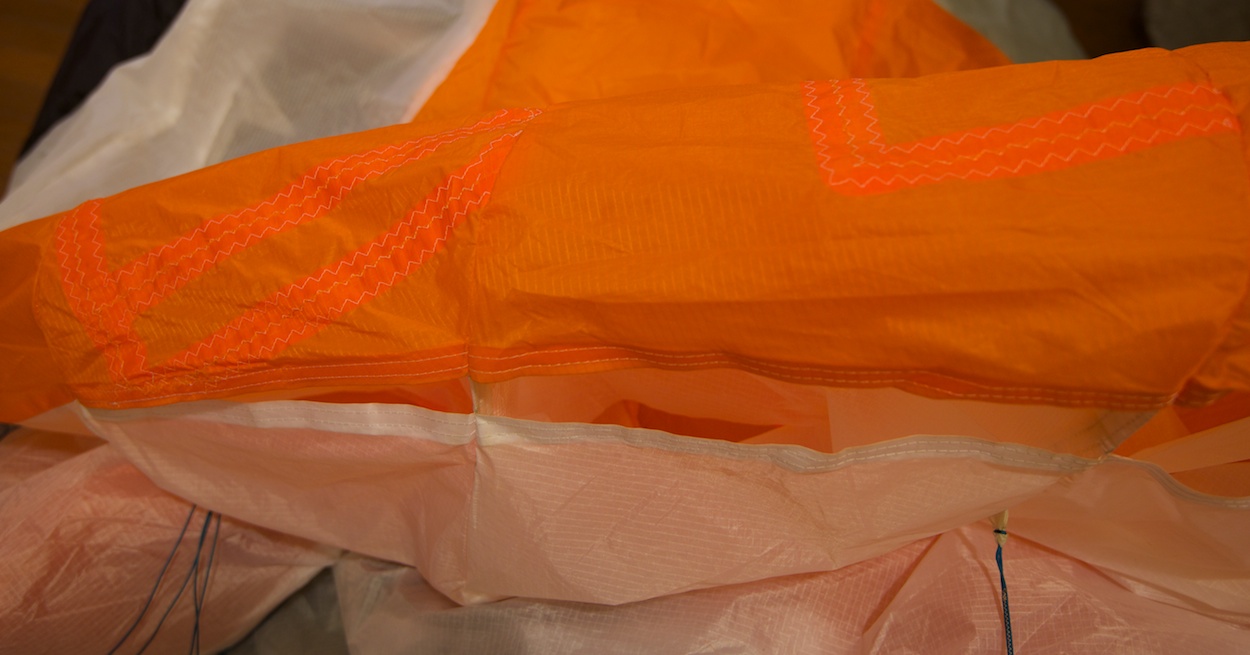
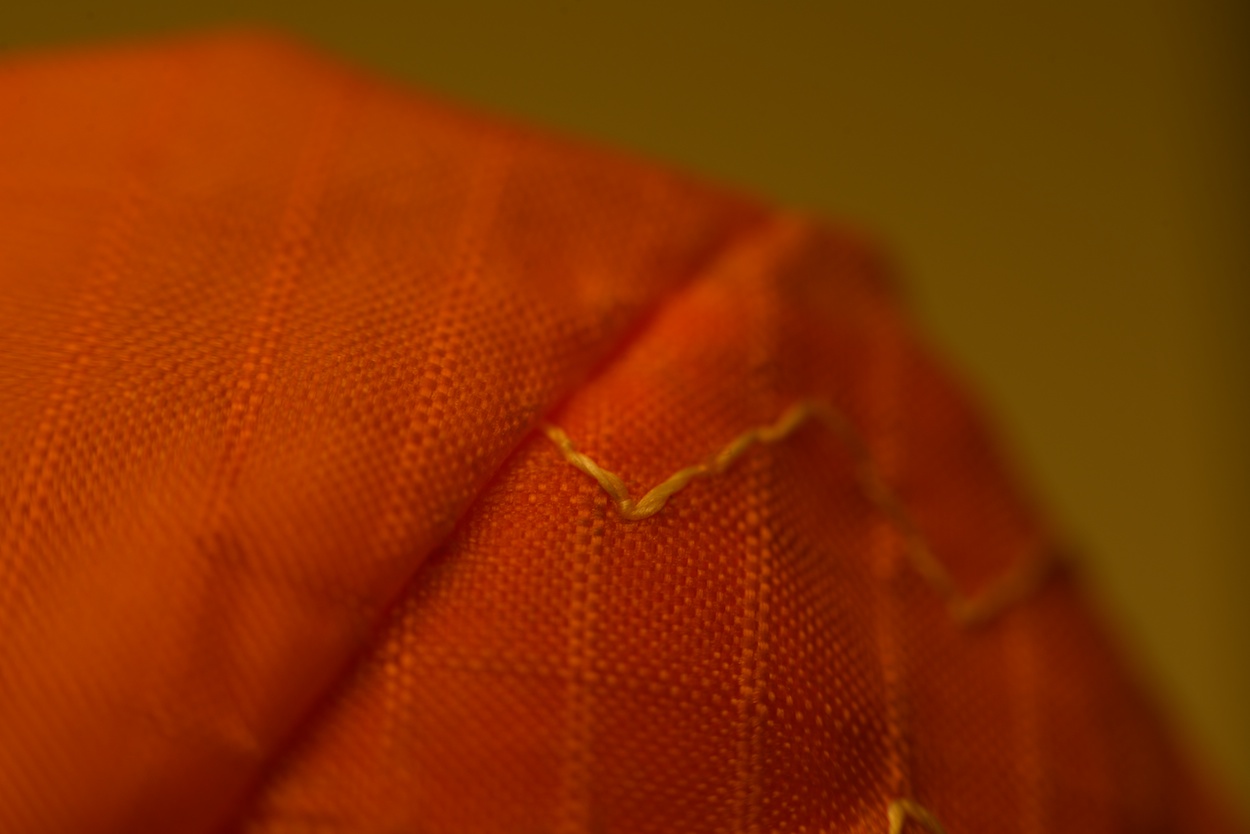
The shot below shows our repair as it meets a main seam
between paraglider wing cells. This repair was done
internally, so the pressure in the cell pushes against the
patch in the correct direction. It also means the cosmetics
of the wing are impacted very little. It has the advantage
that the edges of the patch won't be exposed to snagging on
objects that might lift up the edge and start collecting
debris. Our stitching is the triple-step zigzag. If one were
to cheat here, and jump the patch over the seam, it wouldn't
look nearly so nice, and it would change how the fabric acts
at that seam. We like rebuilding the seams just the way the
factory does.